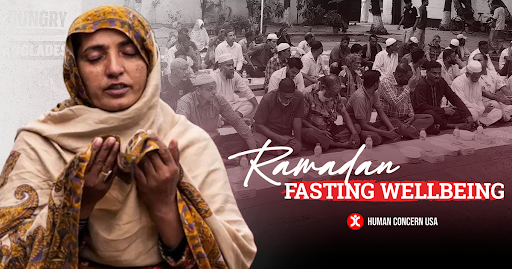
Health & Well-Being During Ramadan: Fasting Safely and Effectively
Ramadan is a time of spiritual renewal, self-discipline, and gratitude. But it’s also a month that challenges the body as much as it strengthens the soul. Maintaining good health while fasting allows us to worship with focus and energy, and to remember those who face hunger without choice.
At Human Concern USA, we encourage balanced preparation for Ramadan: taking care of your own well-being while extending compassion to those fasting in hardship.
Tips for Healthy Fasting in Ramadan
Fasting safely begins with planning. The long hours without food or water can strain the body if not managed properly, so small adjustments can make a big difference.
- Ease into the routine. In the days before Ramadan, reduce caffeine, stay hydrated, and begin shifting your sleep schedule.
- Avoid overeating. It’s tempting to indulge at iftar, but large heavy meals can cause fatigue and discomfort.
- Prioritize balance. Include lean proteins, complex carbohydrates, and fresh fruits and vegetables in your meals.
- Rest mindfully. Allow your body recovery time, especially during the first few days of fasting.
These tips for healthy fasting Ramadan help you maintain energy, focus, and endurance throughout the month.
Planning Healthy Ramadan Sahur Meals
Suhoor, or sahur,, the pre-dawn meal, sets the tone for the day ahead. Skipping it often leads to dehydration, low energy, and difficulty concentrating. A balanced suhoor helps sustain strength and alertness throughout the fast.
For Ramadan sahur meals healthy choices include:
- Slow-digesting foods such as oats, whole grains, and yogurt.
- Protein-rich items like eggs, nuts, and legumes to maintain fullness.
- Hydrating fruits and vegetables, especially cucumbers, oranges, and watermelon.
- Light seasoning and reduced salt to help prevent thirst.
Avoid fried foods or processed sugars early in the morning, they cause energy crashes later in the day.
Fasting Hydration Tips for Ramadan
One of the biggest challenges during fasting is staying hydrated. Proper water intake before and after fasting keeps your body functioning and prevents fatigue.
Try these Ramadan fasting hydration tips:
- Drink water steadily between iftar and suhoor, not all at once.
- Limit caffeine and soft drinks, which can dehydrate the body.
- Include soups, fruits, and smoothies to add hydration through food.
- Avoid excessive salt and spicy dishes that increase thirst.
Hydration helps regulate energy, digestion, and focus, allowing you to fully experience the spiritual benefits of fasting.
How to Exercise During Ramadan
Many people worry about maintaining physical activity while fasting, but movement, when done safely, can actually improve your well-being.
Here’s how to exercise during Ramadan without exhausting yourself:
- Time it wisely. Light activity right before iftar or a gentle walk after breaking the fast helps balance energy.
- Choose moderate intensity. Focus on flexibility, stretching, or low-impact exercise rather than heavy lifting.
- Stay mindful. If you feel dizzy or weak, stop immediately. Your body’s limits shift while fasting, and rest is part of self-care.
The goal is to maintain vitality, not push your limits.
Fasting in Hardship: Remembering Others
While we adjust our meals, hydration, and schedules, millions around the world face Ramadan with far greater challenges. Many families have little or no food to break their fast, and clean water is scarce. For them, fasting is not a choice, it is a daily struggle for survival.
At Human Concern USA, we work to support those fasting in hardship through food aid, water access, and essential relief programs in regions like Gaza, Yemen, and Somalia. A Ramadan donation helps ensure that families who cannot prepare healthy suhoor or iftar meals still have something to eat when the call to prayer is heard.
Your compassion this Ramadan can nourish both body and soul, your own and someone else’s.
A Balanced Ramadan
Health during Ramadan is not just about what we eat or how we move. It’s also about gratitude, moderation, and empathy. As you care for your well-being this month, remember those who fast without comfort, whose health depends on our shared generosity.
Give with intention. Fast with care. And through Human Concern USA, help families in need experience the dignity and peace that Ramadan brings.